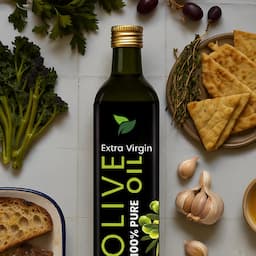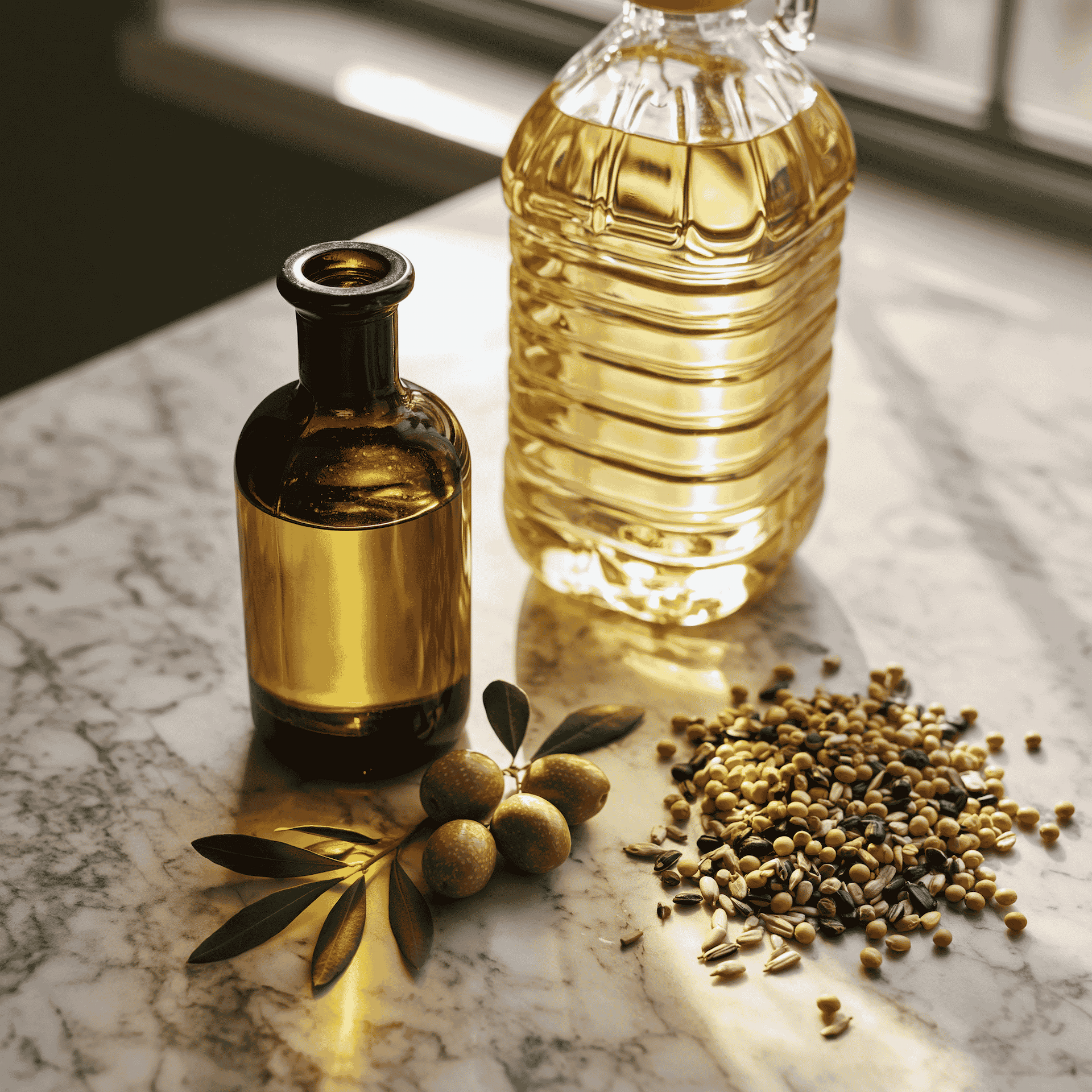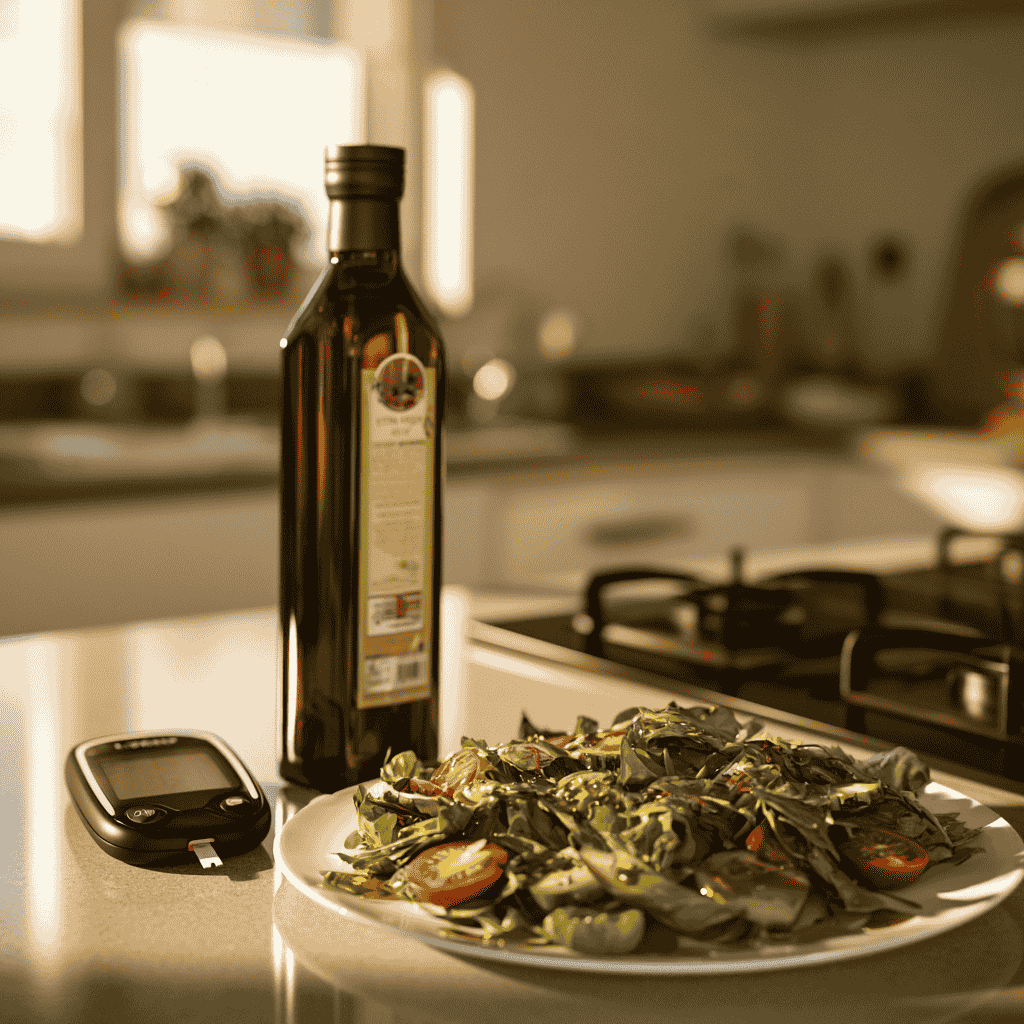
Olive oil does not lower blood sugar like a tablet. Its monounsaturated fat and polyphenols slow how fast a meal's starch reaches the blood, and daily use over months lowers HbA1c by about 0.27%. The benefit depends on substitution — swapping it for ghee, butter, or vanaspati. It sits beside your medication; it does not replace it.
Olive oil does not lower blood sugar the way a tablet does. It contains almost no carbohydrate, so a spoonful with a meal slows how fast that meal's starch reaches the bloodstream.
Over months of daily use, pooled trial data show HbA1c falling by roughly a quarter of a percentage point and fasting glucose by about −0.44 mmol/L. The prevention signal is larger than the treatment signal.
Everything worthwhile here depends on substitution rather than addition — swapping it for desi ghee, butter, or vanaspati rather than pouring it over an unchanged plate. It sits beside your medication. It does not stand in for it.
How Olive Oil Affects Blood Sugar and Glycemic Control
The most useful thing to understand is that this is a fat-metabolism story that happens to change a glucose reading. Because the oil carries negligible carbohydrate, the meal's own starch is what moves your meter.
But the presence of fat delays how quickly that starch arrives, and that delay is measurable. Adding oil to a rice-heavy plate has been shown to shave the postprandial glucose peak by 20–30%.
A trial in type 1 diabetes patients published in Diabetes Care found the same high-carbohydrate meal produced a flatter curve and a more balanced insulin response when eaten with olive oil rather than butter.
There is a second mechanism, less discussed. Fat entering the small intestine triggers GLP-1 and GIP — the incretin hormones that tell the pancreas to release insulin at the right moment.
Olive oil polyphenols also appear to dampen DPP-4, the enzyme that clears GLP-1 — the same target several modern diabetes drugs aim at, though far more gently. Hydroxytyrosol and oleuropein additionally slow the enzymes that break starch into sugar.
Monounsaturated Fatty Acids, Oleic Acid and Olive Oil Polyphenols
Roughly 73% of what is in the bottle is oleic acid, a monounsaturated fatty acid that sits in cell membranes and appears to improve how insulin receptors signal within them.
The rest of the profile matters less: palmitic acid at 7.5–20%, linoleic acid at 3.5–21%, with traces of stearic, linolenic, and palmitoleic acid. Against soybean, sunflower, and corn oil, olive oil carries the highest MUFA content.
MUFAs outperform PUFAs at blunting glucose after eating. Where extra virgin olive oil separates itself is the 1–2% that is not fat at all.
That fraction is the polyphenol load — roughly 500 mg/L in a good extra virgin oil, spanning some 30 antioxidant compounds. Oleuropein signals the pancreas toward insulin release and interferes with GLUT2, the intestinal glucose transporter.
Hydroxytyrosol and tyrosol together account for about 90% of total polyphenols and are unusually well absorbed. Oleocanthal is the peppery catch at the back of your throat — a COX inhibitor structurally echoing ibuprofen.
Add oleacein, β-sitosterol, squalene, and α-tocopherol, and you have a fat that behaves less like a fat and more like a food.
HbA1c and Fasting Glucose Evidence for Olive Oil
The anchor here is Schwingshackl 2017 in Nutrition & Diabetes, which pooled 29 trials and 4 cohorts covering 15,784 type 2 diabetes cases.
Supplementation reduced HbA1c by −0.27% and fasting plasma glucose by −0.44 mmol/L against controls; measured against a low-fat diet specifically, the HbA1c gap widened to −0.35%.
That sounds small until you set it beside the observation that a 0.1% HbA1c drop maps to roughly a 7% cardiovascular risk reduction. A separate review put the Mediterranean-pattern effect at 0.3–0.5 percentage points.
Smaller human work fills in the shape. 25 mL/day of a high-phenolics oil over 4 weeks in overweight T2D patients moved fasting glucose, HbA1c, and body weight — all statistically significant.
Olive leaf preparations run in parallel: 41 patients drinking leaf tea for 14 weeks showed lower HbA1c, with oleanolic acid inhibiting glucose production in the liver. A large registered trial in Saudi Arabia is testing 30 mL/day over three months.

Insulin Resistance and Insulin Sensitivity
A 2025 paper in Nutrients looked at gene expression rather than blood markers, finding olive oil components regulating the genes that govern sugar and fat metabolism — improving cellular glucose uptake and reducing harmful fat buildup.
Downstream sit IRS1 and IRS2, the insulin receptor substrates that hand the signal to Akt and on to GLUT4. Oleuropein appears to keep that chain intact.
The inflammation link is the part most people miss. TNF-α and IL-6 are the pro-inflammatory cytokines that actively drive resistance, and adiponectin — the insulin-sensitizing hormone — falls as they rise.
Oleic acid and hydroxytyrosol together seem to prevent that adiponectin decline. There is a gut angle too: olive oil favours Bifidobacterium and Lactobacillus while reducing the gut permeability that feeds low-grade inflammation.
One genuinely odd finding from Virginia Tech, in Biochemistry: oleuropein appears to detoxify amylin, the toxic protein aggregates that accumulate in the diabetic pancreas. Lye processing strips oleuropein from table olives but leaves it retained in oil.
Type 2 Diabetes Prevention: PREDIMED and Incidence Reduction
Prevention is where the numbers get genuinely persuasive. Highest versus lowest intake carries a 16% lower risk (RR 0.84), with a clean dose-response of 9% lower per 10 g/day.
But the curve is nonlinear and plateaus around 15–20 g/day — which is to say the third and fourth spoon buy you nothing.
Guasch-Ferré 2015 tracked over 145,000 women across the two Nurses' Health Study cohorts for 22 years: above 8 g/day the pooled hazard ratio was HR 0.90.
The substitution arithmetic is sharper than the headline — swapping that 8 g in for stick margarine, butter, or mayonnaise returned 5%, 8%, and 15% lower risk respectively.
PREDIMED remains the reference trial: 7,447 adults aged 55–80, randomised to a Mediterranean diet with 50 mL/day of oil, one with nuts, or a low-fat control, followed a median 4.8 years.
In the PREDIMED-Reus substudy, diabetes incidence ran 10.1% versus 17.9% — near a 51% lower risk. Two honest caveats: the 2013 paper was retracted over randomization issues, then republished in 2018 with the effect intact.
Olive Oil, Cholesterol (LDL/HDL) and Blood Pressure
Type 2 diabetes rarely arrives alone, which is why the lipid data matter as much as the glucose data. Oleic acid lowers LDL cholesterol while polyphenols protect those particles from oxidation.
Oxidised LDL — not merely elevated LDL — is what damages arterial walls. Ghobadi 2018 pooled 27 trials and found olive oil raised HDL cholesterol more than other plant oils.
EFSA granted a formal health claim in 2011 for polyphenol protection of LDL at 5 mg/day hydroxytyrosol. This overlaps with what we cover in olive oil for cholesterol and weight loss.
For those with fatty liver alongside their diabetes, see olive oil for fatty liver. Blood pressure responds too, and unusually this one works even when added to an otherwise unchanged diet.
In young hypertensive women, a high-polyphenol oil cut systolic pressure by nearly 8 mmHg. One practical warning: this is a documented moderate interaction — if you take BP medication, the combined effect can push readings too low, so monitor.
Extra Virgin vs Refined vs Pomace Olive Oil
Grades are legally defined by free oleic acid. Every grade delivers identical calories and near-identical MUFA benefits — so if your only goal is displacing saturated fat, the cheaper grades genuinely work.
| Grade | Free Acidity | Polyphenols |
|---|---|---|
| Extra virgin (EVOO) | ≤1% | High (~4× refined) |
| Virgin | ≤2% | Moderate |
| Ordinary / refined | ≤3.3% | Very low |
| Pomace | Refined blend | Lowest |
What processing removes is the fragile part. Refined and light olive oil lose the overwhelming majority of their anti-inflammatory polyphenols; extra virgin carries roughly 4× the polyphenols of refined.
That single ratio is why almost every diabetes trial specifies extra virgin, and why the results should not be assumed to transfer downward. We break the grade question down in pomace olive oil benefits.
If you want the anti-inflammatory benefit specifically, buy on numbers rather than adjectives. The EU polyphenol claim sets its threshold at 250 mg/kg — serious producers publish figures well past that. Early-harvest, monocultivar pressings from October–November test highest. Check the harvest date rather than only the expiry, choose dark glass, and store away from the stove. Cold-pressed is the term to anchor on — see cold pressed olive oil.
How Much Olive Oil Per Day and How to Cook With It
Recommendations cluster tightly at 1–4 tablespoons daily — roughly 30–60 mL, matching the 50 mL PREDIMED protocol. A useful ratio is one tablespoon per cup of vegetables, split across lunch and dinner.
At 120 kcal per tablespoon, portion control is not optional: overuse in an otherwise unchanged diet can worsen insulin resistance — the exact trap the substitution rule prevents. We break the arithmetic down in calories in one tsp of olive oil.
Use it to drizzle over salads and non-starchy vegetables with lemon, to finish lentils and whole grains, and to dress rice or roti so the meal's glycemic load drops.
The smoke point panic is mostly misplaced. Extra virgin sits at 190–207°C, comfortably above a home stovetop, and oxidative stability — not smoke point — is the real safety indicator.
Extra virgin is markedly oxidation-resistant thanks to its polyphenols. Practical rules that matter: measure oil rather than pouring, never reuse frying oil, and lean toward steaming and grilling. Full technique guidance sits in olive oil for cooking.
Cholesterol-Friendly Cooking Oils in Pakistan
Context changes the advice. Over 40% of adults in Pakistan carry elevated cholesterol, and the national diet runs near 51% carbohydrate and 36% fat — heavy on frying, heavy on hydrogenated ghee.
The shift from costly desi ghee toward cheap vanaspati carrying 14.2–34.3% trans-fatty acids is arguably the single worst dietary change of recent decades here, and a direct cardiovascular driver.
Against the local shelf, olive oil ranks first for cholesterol-friendly cooking; canola follows on its omega-3 ratio, mustard oil holds up as a desi staple with real MUFA content, and corn oil contributes plant sterols.
The head-to-head is in olive oil vs desi ghee, and current rates sit on olive oil price in Pakistan.
Weight is the quiet variable underneath all of it. Despite the calorie density, olive oil increases satiety — people report feeling fuller on smaller portions — and populations consuming it show lower BMI and smaller waist circumference.
Worth being straight: for actively driving fat loss in obesity, the evidence is rated possibly ineffective. It helps you hold a healthier weight; it does not create one. Pair it with soluble fibre, daily walking, and adequate sleep.
"Olive oil sits beside your medication — it does not stand in for it. Everything worthwhile here depends on substitution, not addition: swapping it for ghee, butter, or vanaspati rather than pouring it over an unchanged plate."
Frequently Asked Questions
Does olive oil lower blood sugar?
Not directly, and it does not spike insulin. With negligible carbohydrate, MUFAs help cells use glucose efficiently, and the fat slows digestion so the meal's spike flattens. Consistent use over weeks produces modest HbA1c improvements. Monitor portions — it is calorie-dense.
Is extra virgin olive oil good for type 2 diabetes?
Yes, as a supportive dietary choice, not a treatment. Its polyphenols and MUFAs support steadier blood sugar, better insulin sensitivity, and lower inflammation. It works best as the main fat in a Mediterranean-style diet. Consult a professional about your targets.
Which olive oil is best for diabetes?
Extra virgin, cold-pressed, ideally early-harvest from October–November, with a published polyphenol figure on the label. The EU threshold is 250 mg/kg; higher is better for the anti-inflammatory effect. Avoid light olive oil — refining strips the polyphenols.
How many tablespoons of olive oil per day?
1–3 tablespoons is the common recommendation, up to 4 if it genuinely replaces other fats rather than adding to them. Spread it across meals rather than taken in one go. Consistency matters more than quantity on any given day.
Can olive oil replace diabetes medication?
No. It belongs in prevention and as an adjunct, not a replacement for drug therapy. If you take insulin or oral hypoglycemics, keep monitoring — sensitivity gains can require dose changes.
Any change must be discussed with your doctor. On taking it neat, see drinking olive oil on empty stomach.
Is olive oil better than desi ghee or cooking oil for diabetics?
For most Pakistani households, yes. The superior MUFA profile and polyphenols are absent in refined seed oils, and ghee's saturated fat is the specific problem the substitution benefit addresses. Full comparison in olive oil vs cooking oil.