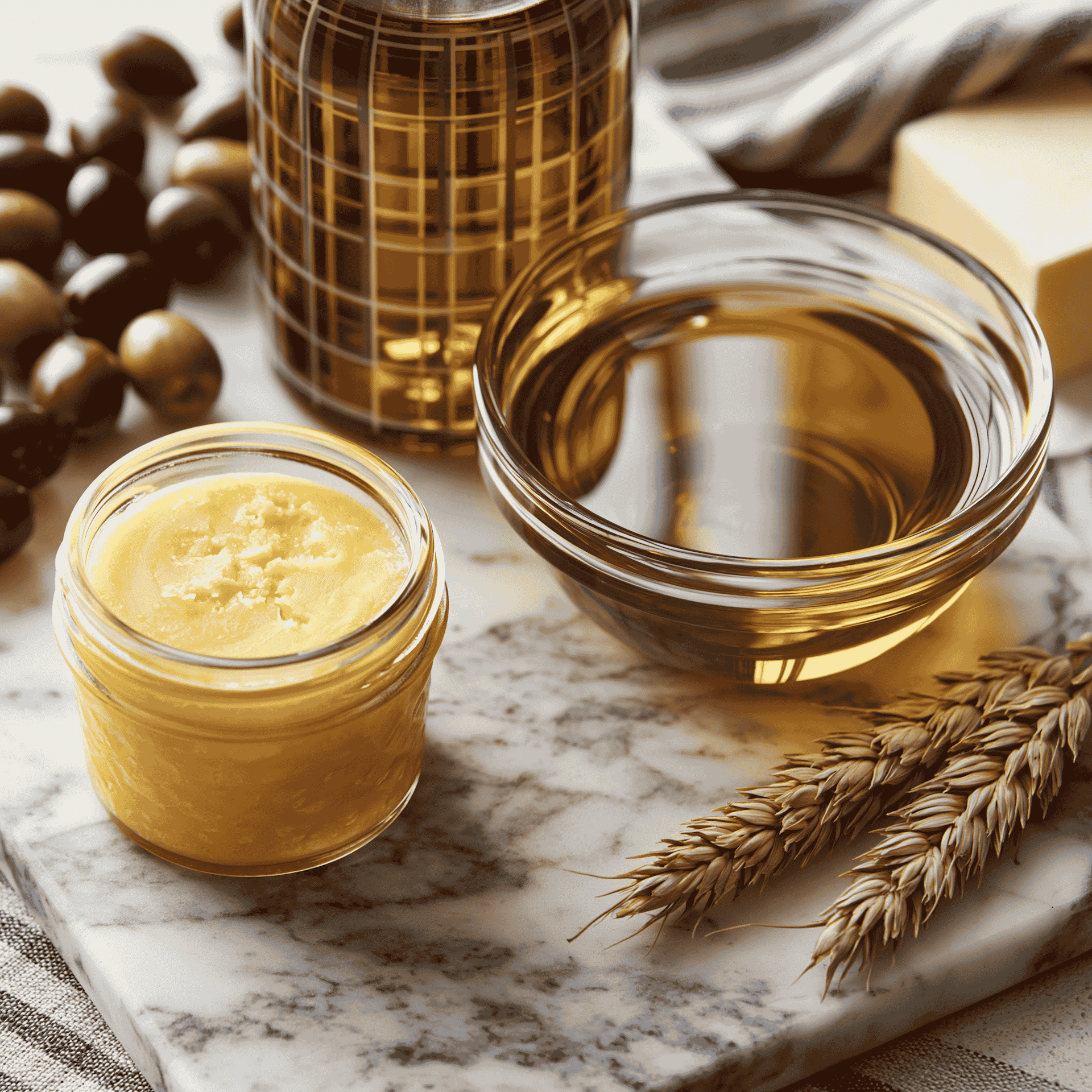
Desi ghee and olive oil both have their place in a healthy diet. Olive oil is rich in monounsaturated fats beneficial for heart health, while ghee provides fat-soluble vitamins and a high smoke point. Depending on the dish, both can be beneficial in a Pakistani diet.
Desi ghee and olive oil are two of the most widely used cooking fats in Pakistani kitchens. Choosing between them depends less on which is "better" overall and more on what you are cooking and what you want to achieve.
Ghee brings a high smoke point and a rich, nutty flavour suited to traditional high-heat dishes, while olive oil offers heart-friendly monounsaturated fats better suited to low-heat and raw uses. The sections below explain where each fat performs best.
What's the Difference?
Ghee is clarified butter made by simmering butter until the water evaporates and the milk solids separate from the butterfat, which is strained away. The result is a golden, shelf-stable fat used across South Asian and Middle Eastern cooking.
Because the milk solids where lactose concentrates are removed, ghee contains very little lactose — making it tolerable for many people who react to standard dairy.
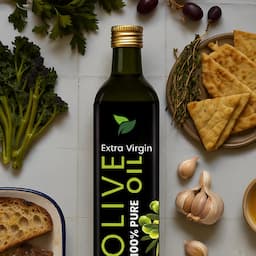
Olive oil is a liquid fat pressed from whole olives, the fruit of Olea europaea. Cold-pressing below 27°C preserves the oil's natural compounds and yields the highest grade, extra virgin.
Grades range from extra virgin down to refined, affecting both flavour and how the oil behaves when heated. Mediterranean cooking has relied on olive oil for thousands of years, carrying a distinct flavour that sets it apart from refined oils.
Nutrition Comparison
Desi ghee supplies the fat-soluble vitamins A, D, E, and K — with vitamin K contributing to normal blood clotting and vitamin D supporting calcium absorption into bone. Its fat is roughly half saturated, which helps carry these nutrients.
Extra virgin olive oil, by contrast, leads with monounsaturated fat and antioxidant polyphenols. Regular consumption is associated with lower levels of inflammatory markers such as C-reactive protein in clinical studies.
In practical terms, the two fats have complementary strengths: ghee is nutritionally dense and lactose-free, while olive oil is prized for its unsaturated fat and antioxidants. Both deliver about 120 calories per tablespoon, so neither has a calorie advantage.
| Feature | Extra Virgin Olive Oil | Desi Ghee |
|---|---|---|
| Dominant fat | Monounsaturated (oleic acid) | Saturated (~50%) |
| Smoke point | ~190–200°C | ~250°C |
| Key nutrients | Polyphenols, vitamin E | Vitamins A, D, E, K |
| Lactose | None | Very low |
| Calories (per tbsp) | ~120 kcal | ~120 kcal |
| Best use | Low-heat, dressings, drizzling | High-heat frying, roasting |
Which Is Healthier?
There is no single answer, because "healthier" depends on your goal. For cardiovascular health, extra virgin olive oil has the stronger evidence base — its monounsaturated fats and polyphenols are associated with lower LDL cholesterol and reduced inflammation.
For a lactose-free, keto- or paleo-friendly fat that also carries fat-soluble vitamins, ghee is a reasonable choice when used in moderation.
Some evidence suggests ghee's butyrate content may support the gut lining, though this should be weighed against its higher saturated-fat content. The most balanced approach for many households is to use both, matching each fat to the dish.
Which Is Better for Heart Health?
Olive oil is generally the better choice for heart health. Its monounsaturated fatty acids and phenolic compounds are associated with lower LDL ("bad") cholesterol and reduced oxidative stress.
Long-term studies of Mediterranean-style diets link regular olive oil intake to fewer cardiovascular events. Ghee is higher in saturated fat, so most dietary guidance recommends keeping it moderate if heart health is a priority.
This does not mean ghee must be avoided entirely — only that it is best treated as a measured part of the diet rather than a primary daily fat for those managing cholesterol.
Which Is Better for Weight Loss?
Both fats are calorie-dense at about 9 kcal per gram, so portion control is the deciding factor regardless of which you choose. Beyond calories, each fat works differently.
Olive oil's dominant monounsaturated fat, oleic acid, is associated with better satiety — some studies show meals containing oleic acid suppress the hunger hormone ghrelin longer than meals high in saturated fat, which may help reduce intake between meals.
Ghee, meanwhile, is rich and filling, so a small amount adds flavour and satiety without large quantities. It also contains conjugated linoleic acid (CLA), which some research links to fat metabolism, though the effect in typical dietary amounts is modest.
In short, olive oil has the edge for weight-focused eating, but ghee can fit a controlled plan when portioned carefully.
Use desi ghee for high-heat, flavour-forward cooking — karahi, nihari, haleem, biryani, pulao, parathas, and BBQ like seekh and chapli kebab. Use extra virgin olive oil for salads, drizzling, marinades, and low-heat sautéing where its polyphenols are preserved. For deep-frying, ghee or refined olive oil holds up better than extra virgin.
Which Is Better for Cooking?
This is where the two fats separate most clearly. Ghee's high smoke point suits high-heat cooking such as frying, roasting, and searing, and its nutty flavour complements traditional Pakistani dishes including karahi, nihari, haleem, biryani, pulao, paratha, and BBQ.
Olive oil performs best in lower-heat and raw applications: sautéing, drizzling over vegetables, marinades, and salad dressings, where its flavour and antioxidants are preserved.
A simple rule of thumb is to reach for ghee when the pan gets hot and for olive oil when the heat is gentle or the oil is used raw.
Smoke Point Comparison
Smoke point is the temperature at which a fat begins to break down, releasing compounds that affect flavour and quality. Ghee has a high smoke point of roughly 250°C, which is why it holds up well to frying and roasting.
Extra virgin olive oil has a lower smoke point, generally around 190–200°C, which suits sautéing and moderate-heat cooking but makes it less ideal for prolonged high-heat frying.
Refined or light olive oil tolerates somewhat higher temperatures than extra virgin. Matching the fat's smoke point to your cooking method helps preserve both flavour and nutritional value.
Which Should Pakistanis Choose?
For most Pakistani households, the practical answer is both, used for different purposes.
Keep desi ghee for the high-heat, flavour-forward cooking that defines local cuisine — karahi, nihari, haleem, biryani, pulao, parathas, and BBQ — where its heat tolerance and taste are hard to replicate.
Keep extra virgin olive oil for salads, drizzling, and low-heat cooking. Whichever you use, moderation matters more than the choice: most guidance suggests roughly 2–3 teaspoons of added fat per day, with those managing weight closer to 1–2 teaspoons.
"Reach for ghee when the pan gets hot — karahi, nihari, biryani, and BBQ. Reach for extra virgin olive oil for salads, drizzling, and low-heat cooking. In most Pakistani kitchens, both fats earn their place."
Frequently Asked Questions
Is desi ghee healthier than olive oil?
Neither is universally healthier. Olive oil has stronger evidence for heart health, while ghee offers fat-soluble vitamins and a lactose-free profile. The better choice depends on the dish and your health goals.
Can I fry in olive oil like I do in ghee?
Extra virgin olive oil has a lower smoke point than ghee, so it suits prolonged frying less well. For deep-frying or high-heat karahi, ghee or refined olive oil fits better; extra virgin is best for sautéing and low-heat cooking.
How much ghee or olive oil is safe per day?
Most nutrition guidance suggests about 2–3 teaspoons of added fat daily, adjusted for your age, activity, and goals. Both fats are calorie-dense, so treat either as a measured addition rather than a free-pour ingredient.
Is ghee suitable for keto or paleo diets?
Yes. Ghee is lactose-free and fits both keto and paleo eating patterns. Olive oil also suits these diets and adds monounsaturated fats, so many people use both.
Which fat is better for high-heat Pakistani cooking?
Ghee. Its high smoke point (~250°C) and nutty flavour suit karahi, nihari, biryani, and deep-frying far better than extra virgin olive oil, whose polyphenols degrade at sustained high heat. Save olive oil for low-heat and raw uses.