There is no single best baby malish oil for every newborn. The right choice depends on the baby's age, whether they were born full-term, and whether their skin is healthy, sensitive, or affected by eczema. Newborns, premature babies, and babies with eczema need extra caution — always discuss regular oil use with your pediatrician.
Naomolood bachay ki malish kis tail se karein? This is one of the first questions every new parent in Pakistan asks — and the answer is more specific than most elders will tell you.
A newborn's skin is not a smaller version of adult skin. It is structurally thinner, with an underdeveloped skin barrier that absorbs what you apply at a far higher rate than mature skin.
A Newborn's Skin Is Not Adult Skin
The vernix — the waxy white coating present at birth — is itself a natural moisturiser. The World Health Organization recommends delaying the first bath for at least 24 hours to preserve it.
Understanding this biology is the real starting point for choosing a baby malish oil. What you put on that thin skin is absorbed quickly, so the wrong oil does more than sit on the surface.
In Pakistan, the malish tradition is near-universal, passed down from grandmothers to new mothers with deep cultural weight. The default choice has historically been sarson ka tail (mustard oil).
But some research has raised concerns that mustard oil may impair the developing skin barrier in newborns. Its high oleic acid content has been associated with greater permeability of the outermost skin layer, letting moisture escape and irritants in.
That is reason enough to pause before the first malish rather than defaulting to habit.
The Four Oils Parents Ask About Most
Pakistani parents ask about four oils most often. Here is what the evidence actually says about each — and the caution that comes with it.

| Oil | Fatty Acid Profile | What the Evidence Suggests |
|---|---|---|
| Coconut oil | Mostly medium-chain saturated fats, low oleic acid | Preterm trials reported improved skin scores without adverse effects; antibacterial and antifungal |
| Olive oil (zaitoon ka tail) | High oleic acid (55–83%), low linoleic acid | Linked to slower skin-barrier development in newborns; not a first choice for eczema-prone or broken skin |
| Mustard oil (sarson ka tail) | High oleic and erucic acid | Concerns it may impair the developing skin barrier; not the safest default despite tradition |
| Almond oil | High oleic acid, moderate linoleic acid | Used in some neonatal units; newborn evidence limited; extra caution where nut allergy is suspected |
Notice what the table does not do: it does not crown a winner. Each oil carries its own caution, and the safest one for your baby depends on factors no chart can decide for you.
Oleic Acid vs Linoleic Acid: Why the Ratio Matters
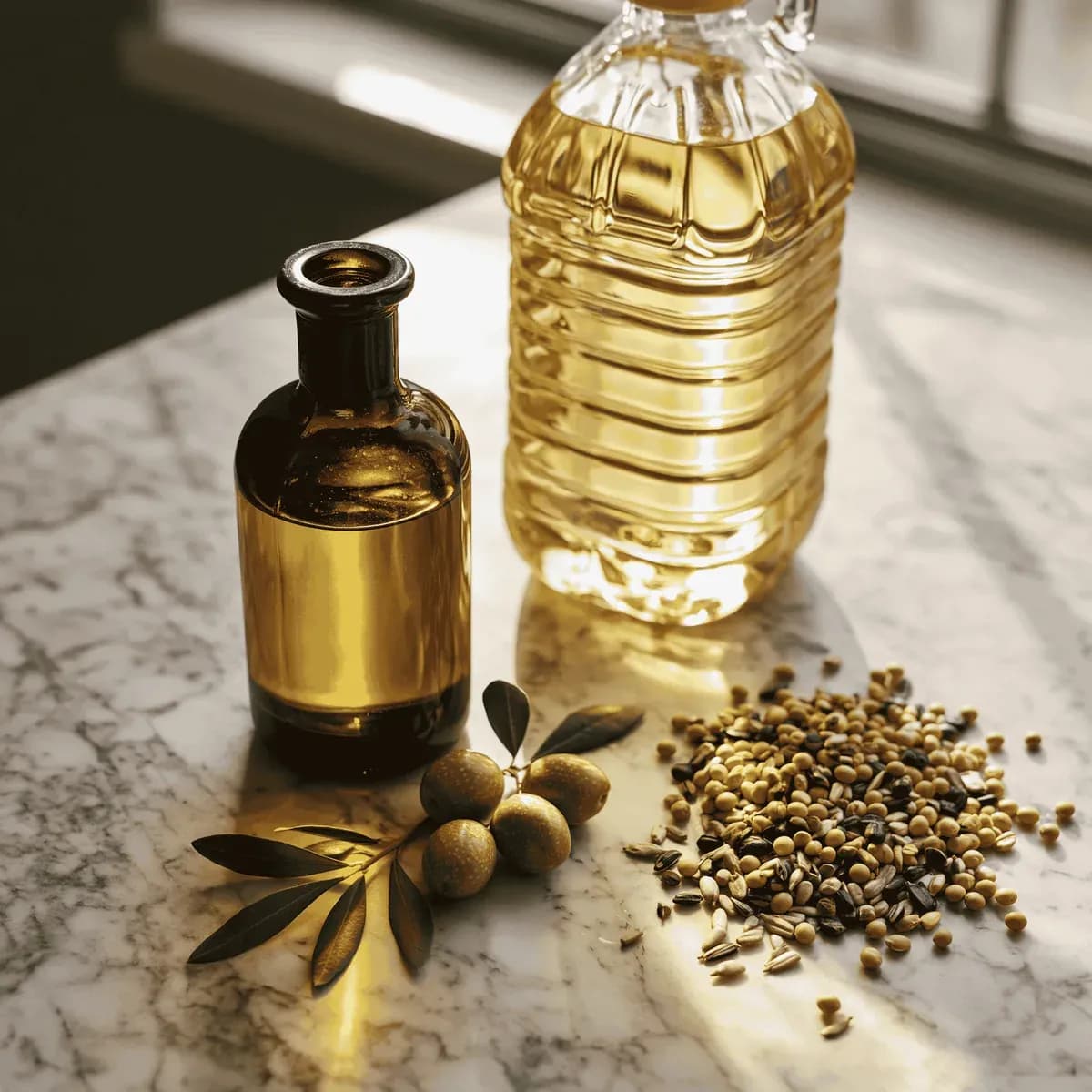
The oleic acid vs linoleic acid ratio is one important factor when evaluating oils for infant skin. Olive oil sits at roughly 55–83% oleic acid and only 3–21% linoleic acid.
Linoleic acid is the fatty acid associated with repairing and reinforcing the skin barrier. High oleic acid concentrations, by contrast, have been linked to barrier disruption in premature and newborn skin.
A blanket recommendation of zaitoon ka tail for every baby therefore needs a clear qualifier: it is not the right first choice for eczema-prone, atopic-dermatitis-affected, or broken skin.
Parents considering olive oil should discuss its use with their pediatrician, particularly for newborn, sensitive, or eczema-prone skin. Our detailed guide to olive oil benefits for baby skin covers what this oil does and does not do for infants.
The honest position is this: olive oil is neither a blanket yes nor a blanket no — age, skin condition, and a pediatrician conversation are the deciding factors.
Cradle Cap and Eczema: Which Oil, or None?
Cradle cap — the flaky, yellowish crust on a newborn's scalp — is one of the most common reasons Pakistani parents reach for a malish oil specifically for the head.
A gentle plant-based oil massaged into the scalp in small circular motions, then left 10–15 minutes before a bath, can loosen those flakes without scrubbing. Coconut oil has been studied in premature infants with improved skin scores.
Grapeseed oil, rich in linoleic acid, is another option some therapists favour for its light texture and fast absorption.
Eczema or atopic dermatitis in infants is a different situation entirely. The inflamed, itchy patches mean the skin barrier is already compromised.
Applying a high-oleic-acid oil — including mustard oil or olive oil — may worsen permeability and trigger a flare. For eczema or broken skin, use the emollient or treatment recommended by your pediatrician or dermatologist rather than choosing an oil yourself.
Never substitute your own judgment for a medical opinion when broken skin is present.
No oil at all is needed in the first month. Eczema and broken skin belong to your pediatrician, not a home remedy. Premature babies need their neonatal team's clearance before any topical product. And every new oil deserves a patch test on intact skin first. These four are not overcaution — they are the difference between a malish that bonds and nourishes, and one that quietly damages your newborn's largest organ.
Patch Test First, Malish Later
Before applying a new oil widely, test a small amount on intact skin and stop if irritation develops. Dab a little on the inside of the elbow or on the tummy — two areas where skin is thin and reactive.
Watch for redness, swelling, or itching over the next 24 hours. A patch test is a simple precaution rather than a guarantee, but it is the cheapest way to avoid a rash after a first malish session.
It matters most where there is a family history of allergies, and extra caution is warranted with nut-derived products such as almond oil when a nut allergy is known or suspected.
Premature skin requires an even more cautious approach. Babies born before 37 weeks have a significantly thinner skin barrier and a higher absorption rate.
Cold-pressed, food-grade, fragrance-free oils with minimal additives are generally preferred over scented or heavily formulated products. For premature infants, ask the baby's neonatal team before applying any massage oil. This is not a decision for cultural tradition alone.
How Long and When to Massage a Baby
Baby ki malish kitni der karein? Clinical guidance suggests 5 to 10 minutes for the first few sessions, building to 15 to 20 minutes once your baby clearly enjoys the routine.
The Raising Children Network cites a range of 10 to 30 minutes for older, settled infants. Timing matters as much as duration: wait 30 to 45 minutes after a feed to avoid spit-ups.
Aim for a calm, alert window — not when your baby is fussy, feverish, or just vaccinated. Sardi mein bachon ki malish is a beloved winter ritual, and a warm, draft-free room is non-negotiable.
Readiness cues are your most reliable guide. Relaxed limbs, steady breathing, and soft eye contact signal your baby is open to touch. If your baby turns away, stiffens, or cries, pause immediately.
NHS guidance advises avoiding oils and lotions until a baby is at least one month old, because the top layer of newborn skin is very thin and easily damaged. Some practitioners suggest waiting longer, particularly for premature babies.
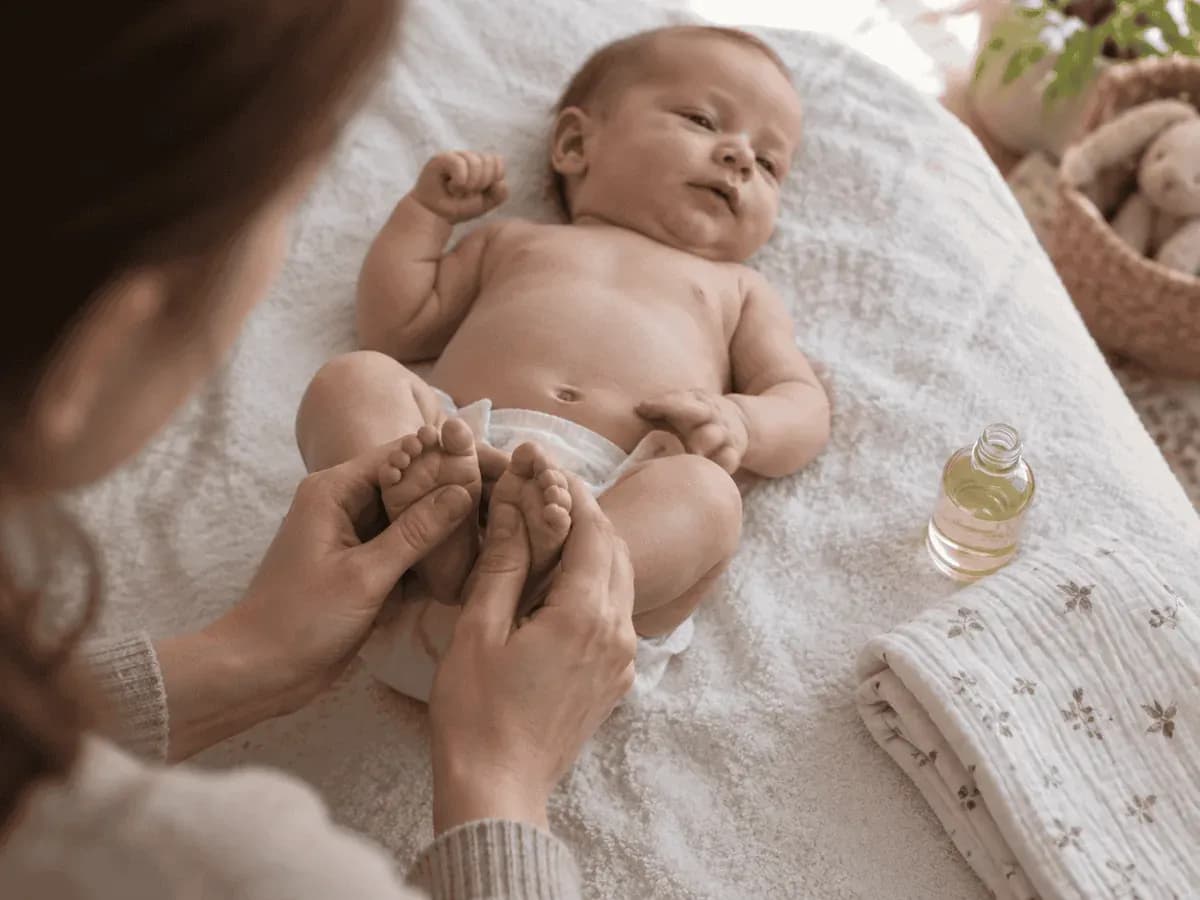
Start at the soles of the feet with firm, slow strokes from heel to toe. Progress to smooth strokes up the legs, clockwise circles on the tummy, and gentle motions on the chest and back.
Always keep one hand on your baby throughout.
Is Zaitoon Ka Tail Safe for Babies? The Honest Answer
Kya zaitoon ka tail bachon ke liye mehfooz hai? The honest answer is: conditionally, and after a conversation with your pediatrician.
For a healthy, full-term infant with intact skin and no eczema or atopic dermatitis history, a cold-pressed extra virgin olive oil used sparingly and preceded by a patch test is not inherently dangerous.
Its antioxidant content and vitamin E are real. Our broader guide to olive oil benefits for skin explains what this oil delivers when used correctly.
Concerns rise when any high-oleic-acid oil is applied daily to sensitive, eczema-prone, or premature skin. The caution is about the skin type, not the bottle.
Quality, Storage and the Medical Bottom Line
Whichever oil you and your pediatrician settle on, quality and storage deserve attention. Loose, unbranded oils sold from open containers can carry impurities, molds, and fungal spores from poor storage.
Look for cold-pressed, fragrance-free, food-grade labelling with no synthetic additives and a clear source. If olive oil is what you have decided on, extra virgin olive oil from a verified supplier gives you traceable sourcing and consistent quality.
The medical bottom line does not change with the brand on the bottle. No oil at all is needed in the first month.
Eczema and broken skin belong to your pediatrician rather than a home remedy, premature babies need their neonatal team's clearance, and every new oil deserves a patch test on intact skin.
"Olive oil for a baby is neither a blanket yes nor a blanket no. Age, skin condition, and a pediatrician conversation are the deciding factors — not tradition, and not the brand on the bottle."
Frequently Asked Questions
Naomolood bachay ki malish kis tail se karein?
There is no single correct oil. For a healthy, full-term baby past one month, a cold-pressed, fragrance-free, food-grade plant oil after a patch test is a reasonable starting point, chosen in consultation with your pediatrician.
Malish kab shuru karni chahiye?
NHS guidance advises waiting until the baby is at least one month old before using oils or lotions. Gentle massage without oil can start earlier. Premature babies need their neonatal team's advice first.
Kya sarson ka tail bachon ke liye theek hai?
It is the traditional default in Pakistan, but some research has raised concerns that mustard oil may impair the developing skin barrier in newborns. Discuss it with your pediatrician before making it a daily routine.
Eczema wale bachay ke liye kaunsa tail behtar hai?
For eczema or broken skin, use the emollient or treatment your pediatrician or dermatologist recommends. A skin barrier that is already compromised is not the place to experiment with oils.
Baby ki malish kitni der karein?
Start with 5 to 10 minutes and build to 15 to 20 minutes as your baby settles into the routine. Wait 30 to 45 minutes after a feed, and stop whenever your baby signals they have had enough.