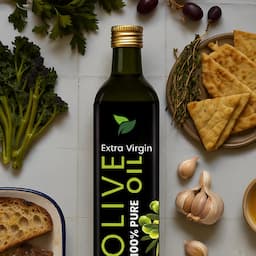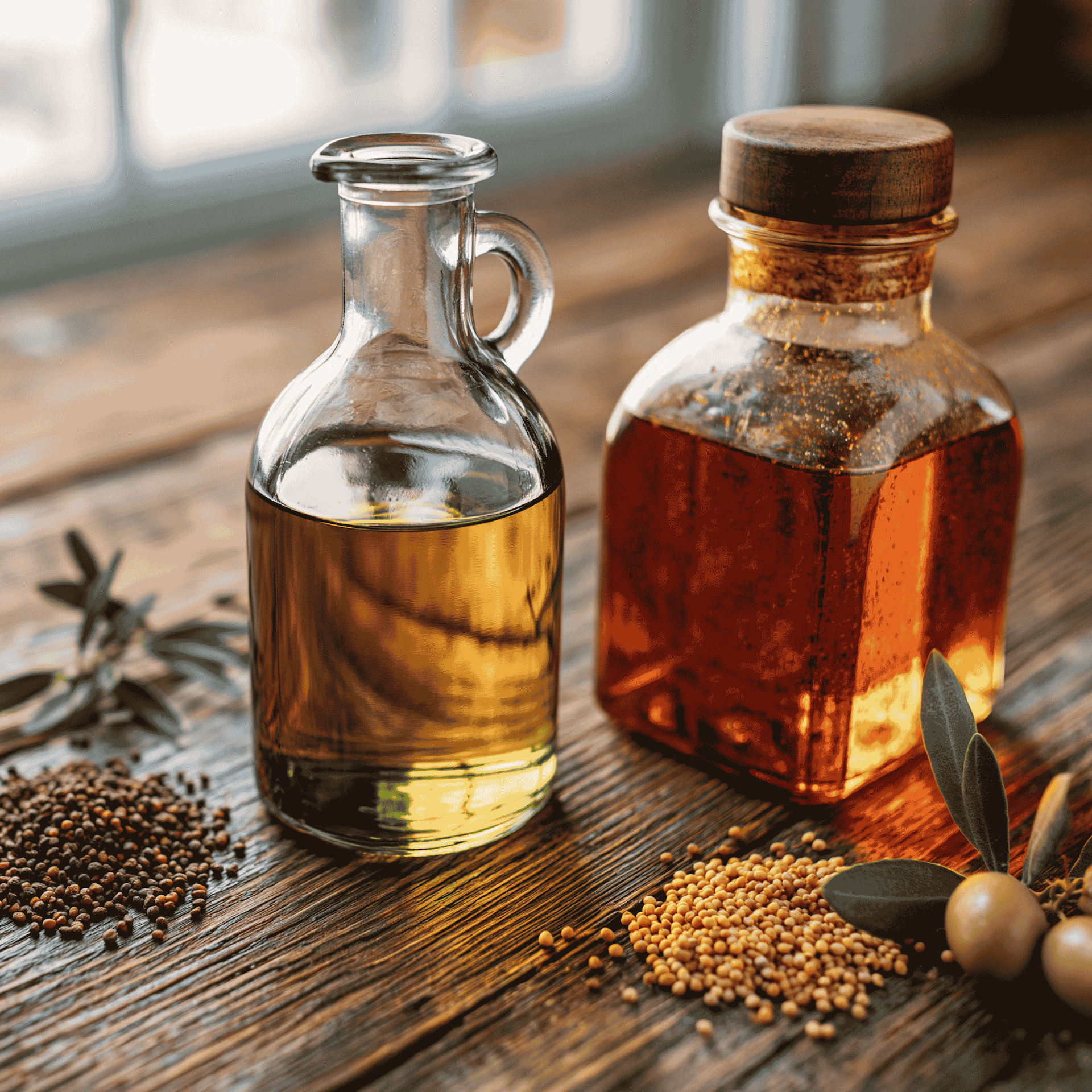
Olive oil is high in monounsaturated fats and antioxidants, making it excellent for heart health and low-heat cooking. Mustard oil has a high smoke point and bold, pungent flavour that defines South Asian frying and pickles. For most Pakistani kitchens, keeping both is the practical choice.
Mustard oil and olive oil each carry properties shaped by geography, extraction process, and chemical composition. Mustard oil dominates Pakistani, Indian, and Bangladeshi food, while olive oil defines kitchens across Italy, Spain, and Greece.
Both have long been used in hair care, skin care, and traditional remedies — though mustard oil's erucic acid content has drawn regulatory limits in some markets. This guide compares olive oil vs mustard oil across nutrition, cooking, and everyday use.
Overview: Two Very Different Oils
Olive oil and mustard oil differ fundamentally in fat composition. Olive oil delivers monounsaturated fats at around 60–65% oleic acid, while mustard oil contains a mix of monounsaturated and polyunsaturated fats.
Mustard oil's blend includes omega-3 (ALA) and erucic acid, which influence LDL and HDL cholesterol levels. Pressed from the mustard plant (sarson ka tel), it has a sharp, pungent taste and a high smoke point suited to high-heat cooking.
Olive oil's polyphenols, vitamin E, and antioxidants help counter free radicals linked to inflammation — a different nutritional strength altogether.

Extraction Process
Mustard seeds are processed by cold pressing, solvent extraction, or steam distillation. Cold pressing at around 60°C keeps the original flavour intact but gives a lower yield, making it costlier than hexane-based solvent extraction used in large-scale production.
Extra virgin olive oil follows a different path: olives are crushed into a paste, then pressed and centrifuged to separate oil, water, and solids such as pomace at under 27°C.
This cold pressing preserves the fruity aroma and beneficial compounds that refined oils lose during high-heat processing.
Smoke Point & Nutrition Compared
Smoke point decides which oil suits which cooking method. Here is how the common grades compare, along with their core nutritional profile.
| Feature | Olive Oil | Mustard Oil |
|---|---|---|
| Smoke point (extra virgin / cold-pressed) | ~160–190°C | ~200–220°C |
| Smoke point (refined) | ~199–210°C | ~230–250°C |
| Dominant fat | Monounsaturated (oleic 55–85%) | Mono + polyunsaturated blend |
| Saturated fat | Low (~7–8%) | Low |
| Omega-3 (ALA) | Trace | Present (25–35% PUFA) |
| Signature compounds | Polyphenols, vitamin E, oleocanthal | Erucic acid, tocopherols, squalene |
Extra virgin olive oil sits at roughly 160–190°C, best for low-temperature cooking, dressings, and drizzling — high heat pushes it past its threshold and degrades its polyphenols.
Refined mustard oil reaches about 230–250°C, practical for frying and sustained high-heat cooking. Cold-pressed mustard oil falls between 200–220°C, while cold-pressed olive varieties manage 190–215°C.
On nutrition, olive oil is built around oleic acid — 55–85% of its composition — with saturated fat low at around 7–8%. Mustard oil delivers 25–35% polyunsaturated fatty acids, split between linoleic acid (omega-6) and alpha-linolenic acid (omega-3 ALA).
Mustard oil also contains erucic acid — limited in edible oils in some countries — alongside gamma- and alpha-tocopherol, phytosterols, and squalene, giving it a more complex chemical profile.
Health Benefits of Each Oil
Olive Oil
Olive oil's polyphenols and vitamin E can help lower LDL cholesterol while supporting HDL cholesterol. Diets rich in olive oil are associated with reduced cardiovascular risk as part of the Mediterranean diet.
Its antioxidants help suppress inflammation pathways linked to chronic disease, and research suggests oleocanthal has anti-inflammatory effects that may support cognitive health.
Evidence is strongest when olive oil replaces less healthy fats rather than being added on top of them.
Mustard Oil
Mustard oil offers a favourable fat profile through its monounsaturated and polyunsaturated content, which may help manage cholesterol levels when used as a primary cooking fat.
It is traditionally used to stimulate appetite and digestion, and its natural antibacterial properties are valued in home remedies. Applied externally, it is a common massage oil for joints and muscles in South Asian households.
Flavour, Taste & Cooking Uses
Olive oil has a mild, smooth profile with fruity notes — trained tasters detect hints of grass, tomato, and artichoke in extra virgin grades, plus a peppery finish from oleocanthal.
Mustard oil brings a bold, pungent flavour with a spicy kick that defines pickles (achar), frying, and sautéing across South Asian kitchens; its sharpness intensifies once the oil is heated.
Mustard oil is the everyday choice for high-heat cooking across Pakistan. Its pungent character stands up to deep-frying and stir-frying, suiting dishes such as karahi, nihari, fish fry, daal tarka, and achar, where its sharpness is part of the flavour.
Olive oil suits medium-low heat — salads, dips, pasta, soups, and roasted vegetables — plus light baking and drizzling over bread. For richer dishes like biryani or haleem, many Pakistani cooks still prefer traditional oils or ghee.
Use mustard oil for karahi, fish fry, daal tarka, achar, and any high-heat frying where its pungent sharpness belongs. Use extra virgin olive oil for salads, dips, pasta, soups, roasted vegetables, and drizzling over finished dishes. For biryani, nihari, and haleem, traditional oils or ghee still blend most cleanly — reserve olive oil for milder, cold-use applications.
Salad Dressings
Olive oil is a natural fit for salad dressings because its low acidity — typically 0.3–0.8% — lets greens come through without overpowering them.
Mustard oil adds a spicy note refined dressings cannot match — a long-standing favourite in Bengali cooking, where just 1–2 teaspoons of raw mustard oil dress a platter with bold, assertive heat.
Cultural Preferences
Olive oil anchors Middle Eastern, European, and Gulf (GCC) kitchens, featuring in staples such as ful medames and zaatar w zeit.
Mustard oil defines much of South and Southeast Asian cooking, powering curries and fish preparations. Its pungency, produced by allyl isothiocyanate, makes it central to Bengali fish dishes where olive oil's mild profile cannot replicate the same depth.
Hair, Skin & Anti-Ageing Care
For hair, mustard oil is traditionally warmed and massaged into the scalp for 30–60 minutes before washing to support circulation, reduce dandruff, and strengthen roots.
For skin, olive oil's vitamin E and antioxidants help with hydration and elasticity and may reduce the appearance of fine lines by neutralising free radicals.
A common home remedy mixes equal parts olive oil and coconut oil as a hair mask for dry hair and split ends. As with any topical oil, results vary between individuals, and a patch test is sensible before regular use.
Weight Loss, Shelf Life & Side Effects
Some studies suggest mustard oil may support metabolism, though the evidence remains limited — it is best treated as one part of a balanced diet rather than a weight-loss aid on its own.
Olive oil can help with portion control — its compounds are linked to earlier feelings of fullness — and a Mediterranean diet rich in olive oil is associated with lower obesity risk in population studies.
On shelf life, an unopened bottle of olive oil stays fresh up to 24 months in a cool, dark place, though extra virgin grades degrade faster once opened. Mustard oil is more stable, keeping roughly 24–36 months when stored properly.
Mustard oil may cause skin irritation, so a patch test is recommended before topical use — its allyl isothiocyanate triggers sensitivity in a minority. Olive oil is well tolerated, but more than 4 tablespoons daily can cause digestive discomfort.
Regulatory Status of Mustard Oil
Regulations for edible mustard oil vary by country, largely due to concerns about erucic acid levels. Some markets, including parts of North America and the EU, restrict or label mustard oil for edible use.
Meanwhile, it remains a daily dietary staple for hundreds of millions across Pakistan, India, and Bangladesh. Cold-pressed and low-erucic-acid varieties are increasingly available for those who want to limit erucic acid intake.
Which One Should You Choose?
The right choice depends on your cooking style and flavour preference. Extra virgin olive oil suits light baking, dressings, and low-heat use, while mustard oil handles frying and high-heat cooking with its high smoke point.
Both can be high-quality, healthy fats when sourced pure and minimally processed. For most Pakistani kitchens, keeping both — mustard oil for everyday frying and traditional dishes, olive oil for salads, dips, and finishing — is the practical approach.
"Use mustard oil for high-heat frying, achar, and traditional desi dishes where its pungency belongs. Use extra virgin olive oil for salads, dips, and finishing. In most Pakistani kitchens, both oils earn their place."
Frequently Asked Questions
Is olive oil or mustard oil healthier?
Both are healthy when pure and minimally processed. Olive oil has stronger heart-health evidence thanks to its monounsaturated fats and polyphenols, while mustard oil offers omega-3 ALA. The best choice depends on how you cook.
Can I use olive oil for frying instead of mustard oil?
For high-heat deep-frying, mustard oil or refined olive oil works better — extra virgin olive oil's smoke point (~160–190°C) is too low. Keep extra virgin olive oil for salads, dips, and low-heat cooking to protect its antioxidants.
Which oil is better for hair, olive oil or mustard oil?
Mustard oil is traditionally massaged warm into the scalp to support circulation and reduce dandruff. Olive oil is lighter and helps with hydration. Many households use both — mustard oil for a deep scalp treatment, olive oil for conditioning.
Is mustard oil banned in some countries?
Some markets, including parts of North America and the EU, restrict or label mustard oil for edible use due to its erucic acid content. It remains a daily cooking staple across Pakistan, India, and Bangladesh.
Which oil is better for the heart?
Olive oil has the stronger cardiovascular evidence — its monounsaturated fat and polyphenols are linked to lower LDL cholesterol and reduced heart-disease risk as part of a Mediterranean diet. Mustard oil's omega-3 content also supports heart health when used in moderation.